Forest School and Outdoor learning
Here at Olveston CEVC Primary school we place a high priority on our children having regular access to outdoor learning experiences. This can been seen in our high quality KS1 outdoor provision, extensive grounds and carefully crafted curriculum. However, we are able to go one step further than most other schools – we work with two Forest School Leaders; Woodland Makery and Hilltops. They run Forest School session in our dedicated Forest School site. These half day sessions run throughout the year and all year groups access this during the academic calendar (Our Headteacher is even Forest School trained and leads sessions!). We know that Forest School is an important part of OUR broader Curriculum, it gives our children the opportunity to engage with the natural world and see it in all its beauty.

What is Forest School?
Forest School is an inspirational process that offers ALL learners regular opportunities to achieve and develop confidence and self-esteem through hands-on learning experiences in a woodland or natural environment with trees.
Forest School is a specialised learning approach that sits within and compliments the wider context of outdoor and woodland education.
At Forest School all children are viewed as:
- equal, unique and valuable
- competent to explore & discover
- entitled to experience appropriate risk and challenge
- entitled to choose, and to initiate and drive their own learning and development
- entitled to experience regular success
- entitled to develop positive relationships with themselves and other people
- entitled to develop a strong, positive relationship with their natural world
This learner-centred approach interweaves with the ever-changing moods and marvels, potential and challenges of the natural world through the seasons to fill every Forest School session and programme with discovery and difference.
Why do we think Forest School is Important?
One of OUR curriculum Golden threads is spirituality and moral growth. Part of this is helping children develop positive mental health. Thankfully, there is a growing emphasis placed on mental wellbeing of children. At far younger ages children are expressing stress and anxiety traits. Yet, at the same time there is a wealth of evidence that encourages instead of prescribing medications to increase opportunities to spend time outside in green spaces such as woodland, fields or forests to reduce rates of mental illnesses in children.
Forest School can increase numerous skills for children such as confidence, self-esteem, motivation, concentration, problem solving ability, and stress relief. Not only that, it can also provide children with the experiences to learn, apply and transfer skills into everyday life for example communication during fire safety, problem solving during den building, team work during bug hunts, independence during free play, and respect for peers, wildlife and the environment in every session.
The benefits of participating in Forest School are wide-ranging and far-reaching. Children that take part in blocks of sessions at Forest School begin to show signs of play that is progressively deeper and more meaningful and the benefits can be felt back in the classroom environment. The brain begins to form neural pathways that develop the way children behave, communicate, and interact as well as the enjoyment from exercise and being outside in the natural environment. Over time, these changes become permanent. Regular sessions allow children the chance to develop trust with the adult leaders and their peers, following the rules because they understand the safety reasons. This deeper understanding can then be applied to the wider school or community rules. Children are allowed time and space to make their own choices and express their own creativity, connecting each child with their own sense of self-worth.
Forest School offers an alternative way to be active for those that do not enjoy taking part in competitive or mixed sports. It offers fresh air and lots of energetic movement and is accessible regardless of ability. It can develop life-long habits of walking and engaging with the environment. Physical skills of balance, strength, and flexibility develop with regular participation and can then be applied to their daily lives and in other activities. Children learn through new experiences, in a setting such as Forest School where the risks can be managed, children have the opportunity to approach tasks that in other settings may be seen as ‘unsafe’. Children can learn and make progress by taking risks and assessing hazards, a skill which is important as they grow up and become young adults. When the participants take responsibility for the rules and how they are followed, this makes it easier to stick to them and improved behaviour can be seen. Adults and children alike now lead rushed lives, some with limited access to the natural world. As a result, this can lead to poor concentration, lack of motivation, and social skills. Contact with nature can protect and enhance the wellbeing of children, develop coping strategies for the pressures of life, and promote resilience. Forest School can create a sense of community, belonging, and security for the children, leaders, and parent helpers. It provides an environment where children’s spirits are nourished – giving them the conditions for growth.
What does a typical Forest School session look like?
Before beginning each session, the Forest School Leader prepares by checking the safety of the site. This ensures they are aware of any potential hazards or changes to the Forest School site and can prepare accordingly. The Forest School Leader also checks the weather forecast – the only weather that prevents Forest School from taking place is extremely high winds or thunder and lightning.
- Children prepare by dressing in their weather appropriate clothing
- A special ‘head-count’ is taken, the children participate and are involved so that the safety of the whole group is ensured.
- The children walk to Forest school and sit at ‘Base Camp’ where the rules are recapped. They say the rules and discuss what they mean, taking ownership of their session.
- A focus activity prepared by the Forest School Leader is explained, usually topic linked. Children do not have to choose this task however it provides some structure for those that would like ideas and is often a starting point for their own independent exploration.
- Typically, a session during the school day will last between 2 and 3 hours.
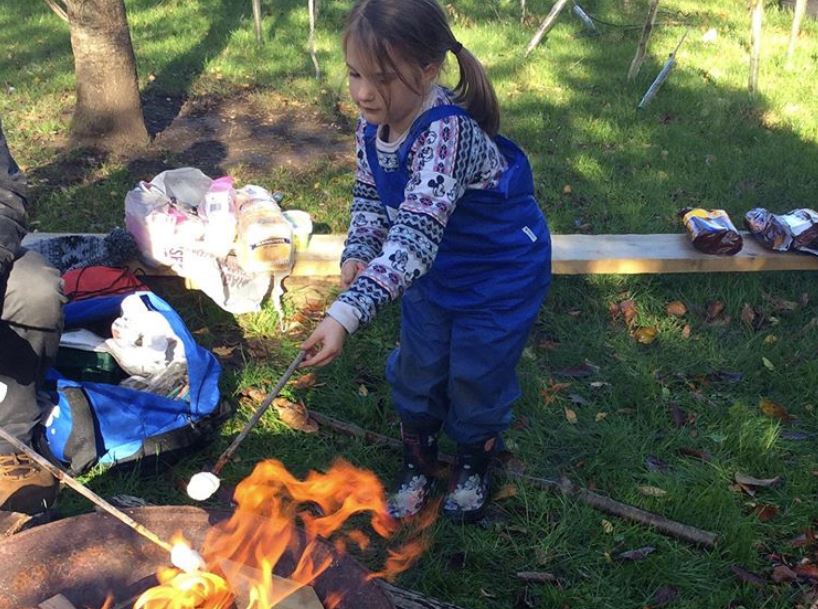
- With a call of “1, 2, 3 – Base Camp”, the children tidy up leave the site how they found it, returning to the log circle to discuss what they have done, share their learning, and enjoy a hot or cold drink. Hot Chocolate at the end of a session is hi-light for many of the children and adults, especially in the Winter!
Examples of Forest School activities chosen by the children:
- Using natural resources such as leaves and sticks to make repeating patterns or a Rangoli pattern
- Building a nest or hole for an animal
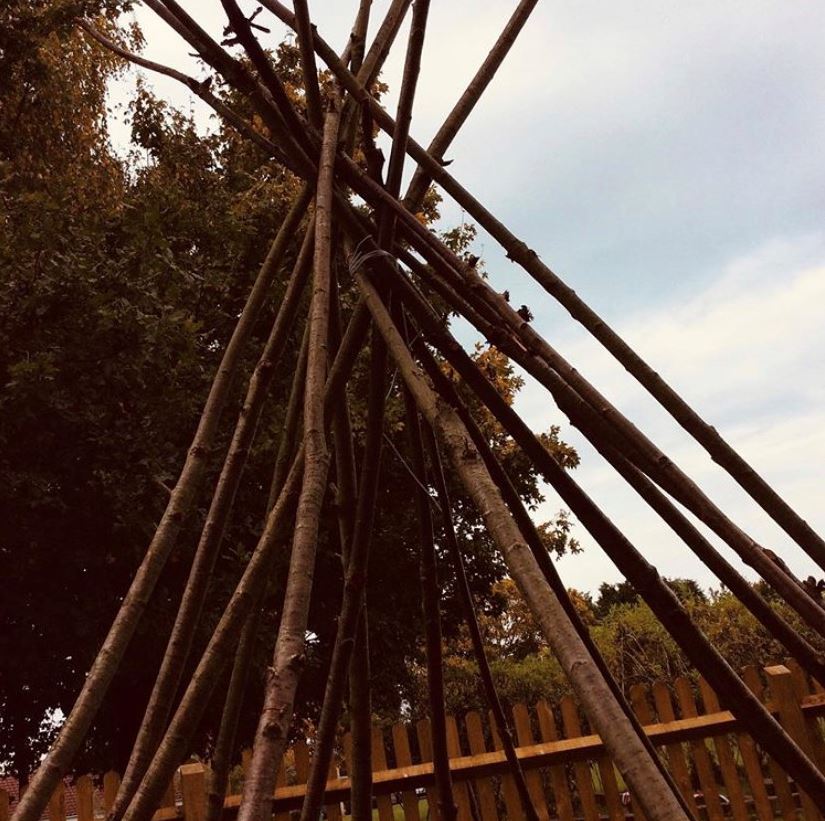
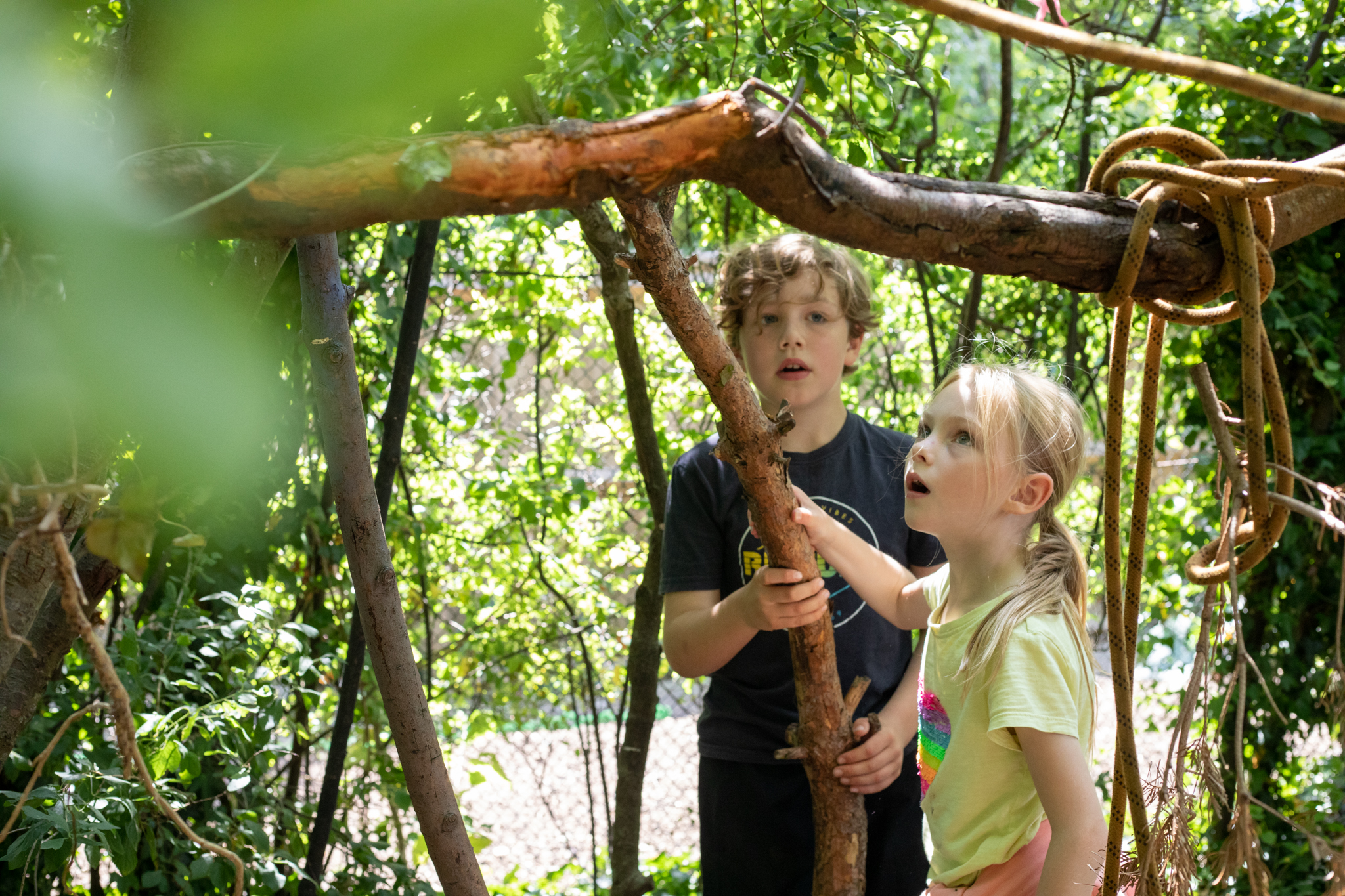
- Creating dens and waterproof shelters
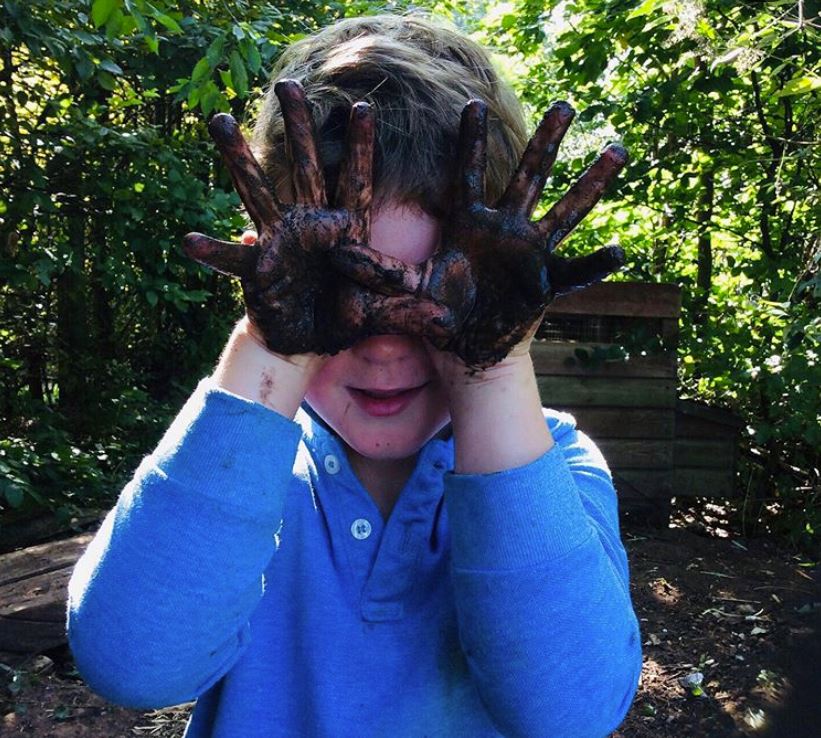
- Digging in the mud hole to find insects and ‘treasure’
- Making a shop from wood and finding objects to ‘sell’
- Mud painting
- Willow weaving to create dream catchers
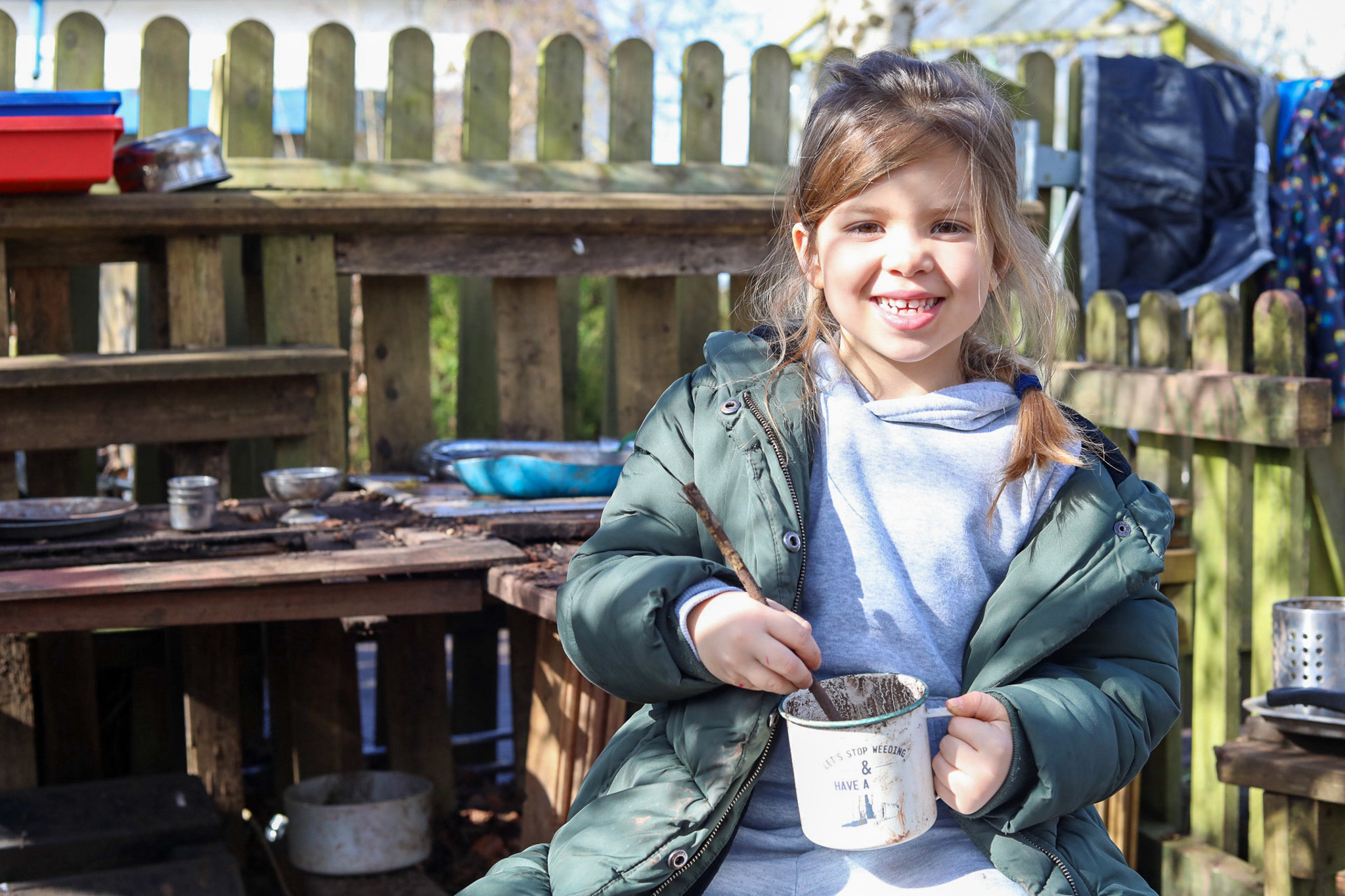
- Cooking using mud, water, grass, sticks etc
- Whittling sticks using ‘easy peelers’ or whittling knives. (supported by a trained leader)
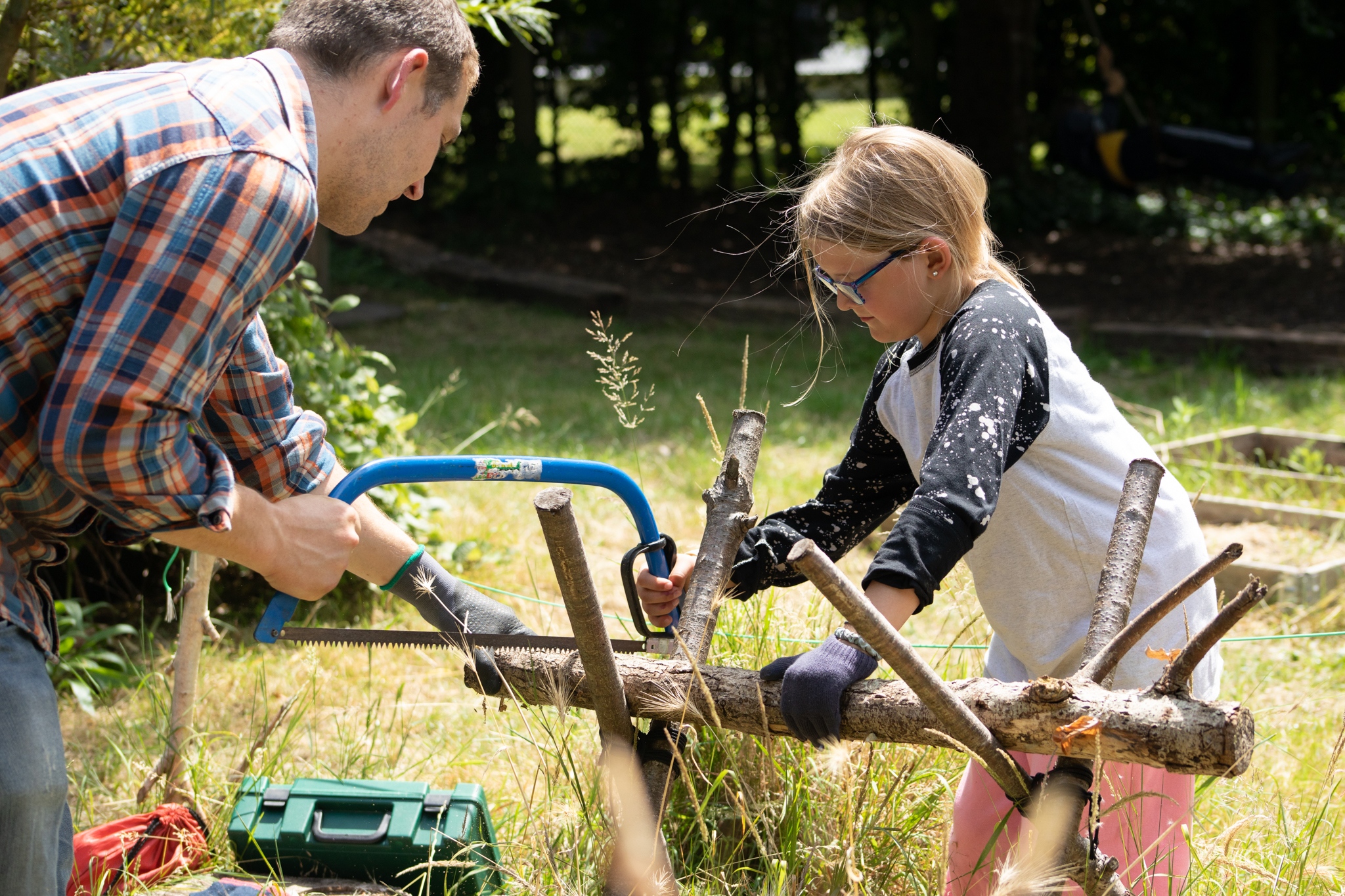
- Using the Bow saw to create mallets (supported by a trained leader)
- Planting and using secateurs to cut back and maintain the site
- Making
- Tree/ bark rubbing
- Painting using rainwater and mud